
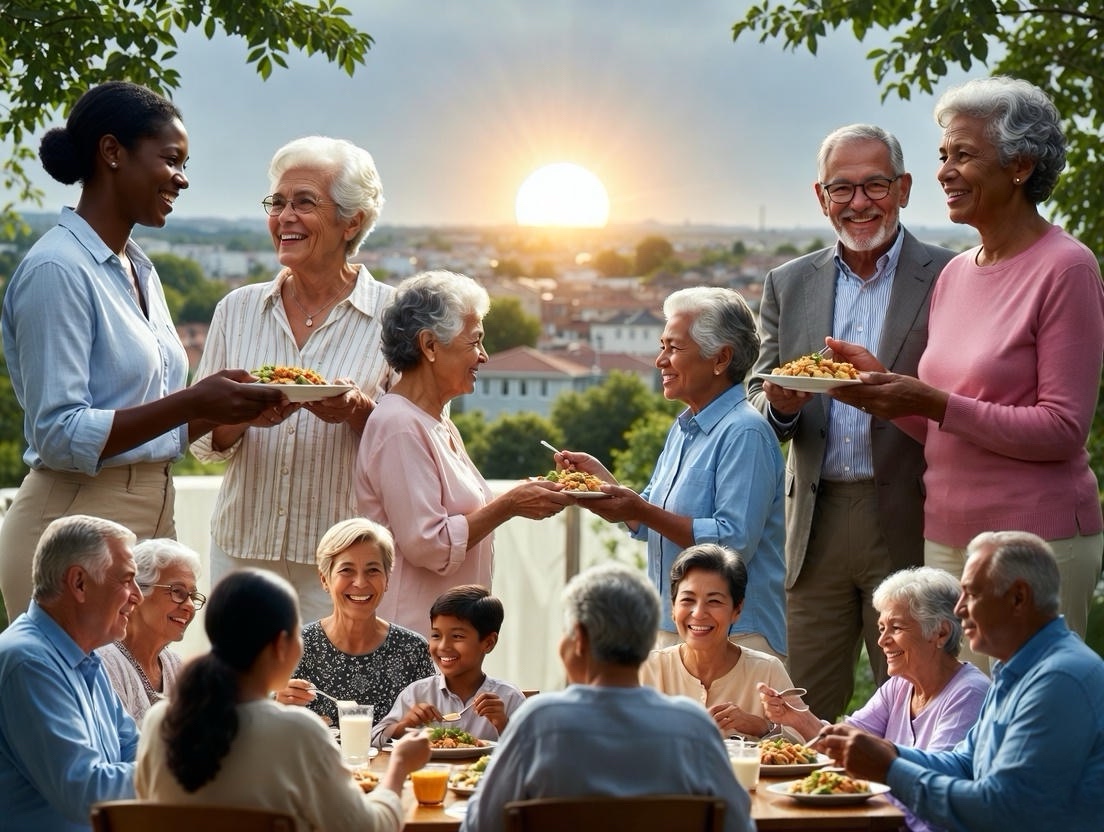
What are you thankful for?
For me, this year has been one of progress paired with pressure, two forces that have worked together to deepen my gratitude and refine my inner life. At the beginning of 2025, the Lord burdened my spirit with the phrase “OPEN HEAVENS” and that became our theme for the year. I did not fully grasp its depth at the time, but I sensed that its meaning would unfold gradually, shaping both my perspective and my posture throughout the year.
From midyear through November, our ministry walked through a series of unexpected developments, changes that introduced discomfort, transition, and a level of stretching that tests a leader’s emotional and spiritual foundations. Yet even amid the strain, my spirit has remained anchored. Like Caleb, I find myself still able to say, “Give me this mountain,” not from ambition, but from quiet confidence in the One who called me to his purpose. Amen!
So as the year draws to a close, I am deeply thankful, fully assured that He who began a good work in me will continue to perfect it. Every challenge has carried wisdom, every shift has carried purpose, and every pressure has pressed me closer to His design.
Thanksgiving is more than a holiday tradition. It is a stabilizing force that shapes how families interact, how communities function, and how nations rise or decline. When viewed from a kingdom governmental lens, thanksgiving becomes a practice that strengthens internal order, promotes unity, and reinforces the values that hold societies together.
Scripture and history both show that gratitude is not only a personal virtue. It is a cultural foundation that influences public behavior, leadership, and long-term stability.
Thanksgiving and the Internal Government of the Family
A healthy society begins with healthy households. The family is the first environment where individuals learn respect, responsibility, and cooperation. When thanksgiving is practiced within the home, it creates an atmosphere marked by peace, honor, and recognition. I remember growing up, my parents would wake us up as early as 5 AM for worship. That consistent practice shaped my thinking, my values, and my sense of responsibility well into adulthood. It taught me that gratitude is not accidental. It is cultivated, and when cultivated early, it becomes a stabilizing force throughout life.
“…in everything give thanks; for this is the will of God in Christ Jesus for you”. (1 Thessalonians 5:18).
Scripture affirms this pattern. Paul writes that believers should give thanks in everything because this reflects the will of God for them . This is not simply a spiritual rule. It is a principle that shapes emotional and relational order.
Gratitude reduces conflict and softens the tone of communication. It encourages humility and gives everyone a sense of belonging. Children raised in an environment of appreciation tend to develop stronger resilience and greater respect for authority.
When thanksgiving is absent, households often descend into entitlement and constant tension. Gratitude therefore acts as a form of internal governance that stabilizes relationships and shapes the character of the next generation.
Thanksgiving and the Strength of Communities
Communities grow stronger when gratitude becomes part of their shared culture. In difficult seasons, communities that practice thanksgiving display greater resilience and cooperation. Their members trust one another more and are less likely to fracture under pressure. Consider what happens when a community faces tragedy, whether a natural disaster or the heartbreaking loss of life that has become far too common today. In such moments, gratitude does not ignore the pain, but it helps people hold on to hope, support one another, and rebuild with a unified spirit rather than collapsing into fear or division.
Behold, how good and how pleasant it is for brethren to dwell together in unity! (Psalms 133:1)
The Psalmist highlights the power of unity, describing it as a place where God commands blessing. Gratitude fuels that unity by keeping communities focused on what they share rather than what divides them.
Historically, gatherings of public thanksgiving served an important role. They reminded people of their shared dependence on God and on each other. They unite diverse groups under common values and created a sense of direction and hope. A community shaped by gratitude is easier to lead and easier to unify. A grateful people are more patient, more cooperative, and more willing to contribute to the common good.
Thanksgiving and the Stability of Nations
Nations rise and fall based on the values they uphold. Gratitude is one of the values that strengthens national character. It produces citizens who honor the past, respect authority, and recognize the sacrifices that built their country.
Blessed is the nation whose God is the LORD, the people He has chosen as His own inheritance. (Psalms 33:12)
The nation whose God is the Lord is blessed, not because of wealth or power, but because of alignment with His order. Thanksgiving keeps that alignment clear.
When thanksgiving is practiced at a national level, it serves as a public acknowledgment of the source of a nation’s prosperity and protection. This was true for ancient Israel (Deuteronomy 8:10–14). It was true for early American society and still remains true today.
When thanksgiving fades, cultures drift and entitlement grows; respect for authority weakens, and national unity erodes. A nation that loses gratitude loses its internal strength. Thanksgiving realigns a nation with its foundations. It reinforces the moral and civic principles that keep societies stable and resilient.
Why Thanksgiving Remains Essential Today
Today’s environment is marked by stress, division, and pressure on families and institutions. In this climate, thanksgiving is more relevant than ever. Gratitude reduces emotional strain, encourages clear thinking, and prevents communities from drifting into hostility or fear.
Be anxious for nothing, but in everything by prayer and supplication, with thanksgiving, let your requests be made known to God… (Philippians 4: 6)
Paul wrote to the church in Phillipi, teaching the believers to present requests to God with thanksgiving, because gratitude guards the heart and mind. This principle applies not only to individuals but also to the systems they build.
For leaders, thanksgiving preserves clarity and steadiness. For families, it builds trust and harmony. For nations, it reinforces unity and responsibility.
Thanksgiving is not a small practice. It is a governing influence that helps individuals and entire societies function with wisdom and strength.
Conclusion
Thanksgiving strengthens families, communities, and nations by promoting order, humility, resilience, and unity. It shapes character, stabilizes public life, and ensures that people remember their responsibilities to one another. Scripture confirms its importance, and history proves its impact.
Enter into His gates with thanksgiving, and into His courts with praise. Be thankful to Him, and bless His name. (Psalms 100:4)
Again, the Psalmist calls us to enter God’s gates with thanksgiving because gratitude positions us for everything else that follows. When thanksgiving becomes a way of life, families thrive, communities grow, and nations stand strong.
Kingdom Blessings & Happy Thanksgiving! 🙌🏾
—Benhail E. Chris ✍🏾



Hello.This article was really interesting, particularly because I was investigating for thoughts on this matter last Thursday.